
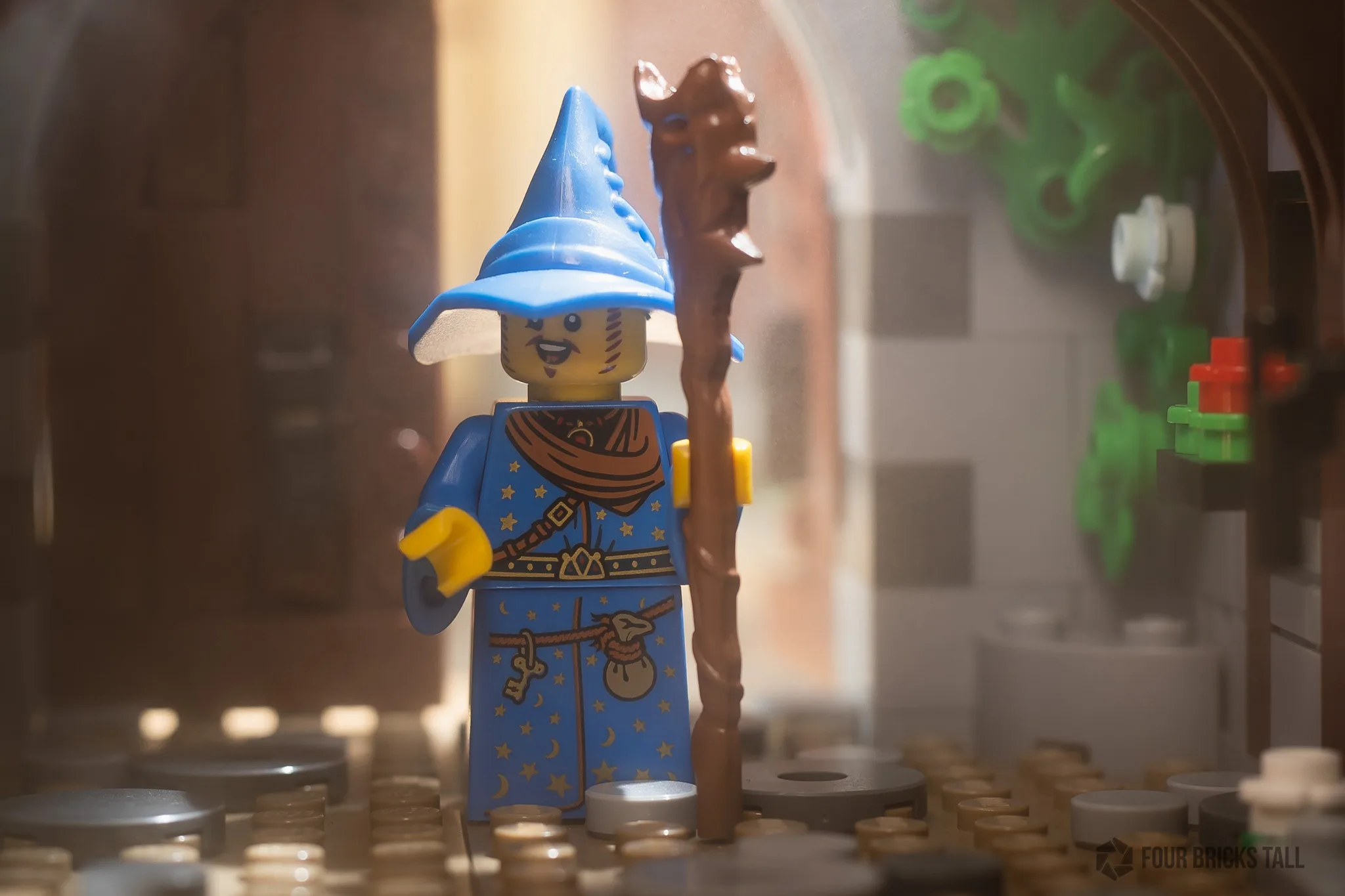
Before anyone notices your lighting or depth of field, they have to care about what’s in the frame.
I learned this before I ever photographed LEGO. When I shot portraits, my best photos weren’t necessarily of the prettiest models. They were of the most interesting people. Lighting and composition mattered, of course, but they couldn’t do all the heavy lifting. The person in front of the lens had to bring something to the table, too.
The same applies to LEGO photography. And I’m saying this as someone who scrolls past most Star Wars, Harry Potter, Marvel, and Technic photos. The lighting can be gorgeous, the composition flawless, but I still keep scrolling because I’m not interested in the subject.
That’s perfectly normal. No LEGO photographer should expect every LEGO fan to care about their subject. LEGO fans have their favorite themes, and most of us aren’t interested in the entire catalog LEGO pumps out every year. Which is a good thing, because we’d all be broke.
For me, choosing an interesting subject is part of the creative process. I enjoy building characters nobody has seen before, then figuring out how to photograph them so they come to life.
It turns out other people enjoy looking at them, too.
I’m not saying you should ignore your audience or that engagement doesn’t matter. We all enjoy knowing that our work resonates with people. And it’s how we find community. But I don’t want the pursuit of likes to dictate what I make. I’d rather create something I’m excited about and let people who share that excitement find me.
This is my approach, not a rulebook. If you’re curious about how I build characters that make people look twice, here’s how I do it.
Fresh takes on Out-of-the-box minifigs
A lot of LEGO photography revolves around stock minifigs: the latest Collectible Minifigures series, a Star Wars trooper, or a Marvel superhero. There’s nothing wrong with that. Shoot what you love. The problem is that thousands of other accounts are photographing the same figures, often in similar poses, against similar backgrounds, and with similar lighting.
After you’ve scrolled past the same minifig for the third time, the novelty wears off quickly. There’s nothing new to discover, no little mystery to solve, and no reason to look twice. Your brain has already filed the image away before your thumb has finished scrolling.
I touched on the scrolling side of this in Why bad photos are popular on social media. Basically, our brains want simple messages, and the easiest message of all is a clear photo of a shiny new thing.
There’s another problem, too. Most people following LEGO photography are LEGO fans, many of whom have been building since they were six. They’re interested in what people can make with LEGO.
A stock minifig starts you off with something familiar. The viewer already knows what it looks like, and probably knows where to buy one. You’re not giving them much that’s new just by putting it in front of a camera.
That doesn’t mean you can’t make a great photograph of it. It just means the novelty has to come from somewhere else: the pose, the story, the setting, the lighting, or something the viewer hasn’t noticed before.
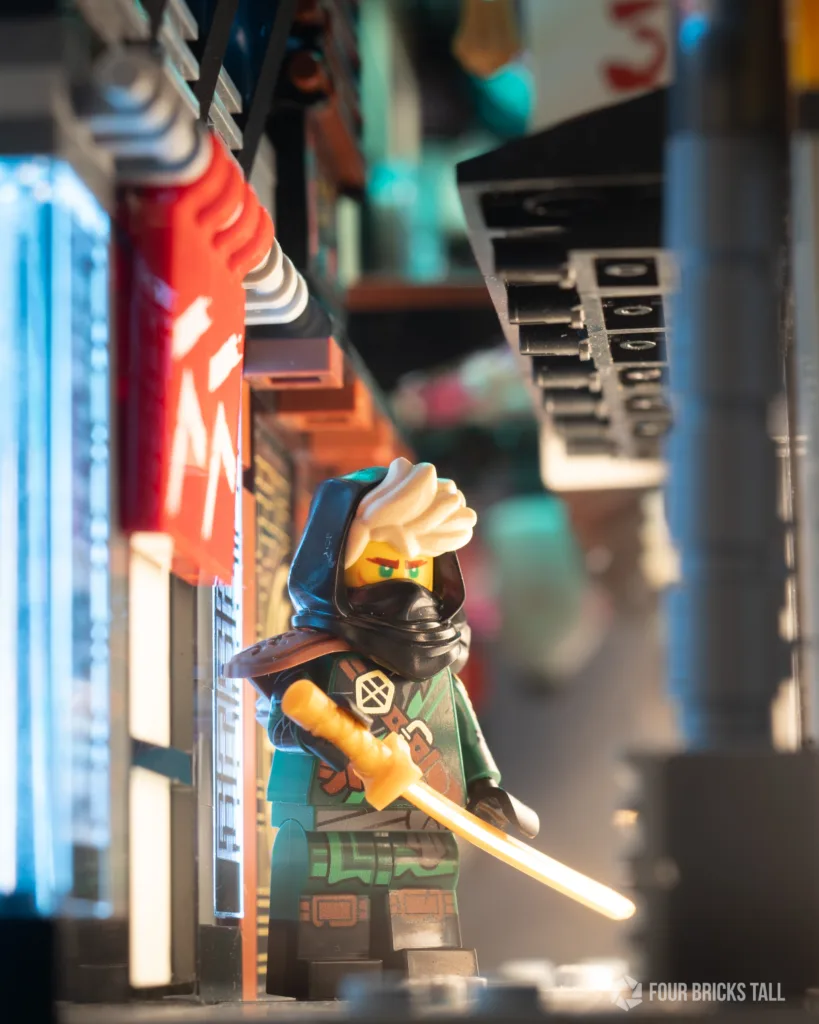
This Mysterious Ronin minifig was fresh out of the CMF blind box. I placed it in a brick-built Japanese setting, added dramatic lighting that carved out his shape, pumped in a little mist, and shot from a lower angle to make him look more powerful and include more of the buildings. A stock LEGO minifigure made more interesting.
Novelty is human
We’re drawn to new things. It’s why we travel, try unfamiliar food, and consume LEGO leaks. With every official LEGO set announcement, we’re zooming into the product photos to get a closer look at what’s coming to store shelves, and possibly our display shelves, soon.
Novelty gives us a reason to pay attention. In photography, that reason can exist before the viewer even notices your lighting, composition, or depth of field.
But I’m not suggesting you need to buy or invent something new in every shot to keep an audience entertained. Please don’t. That’s an excellent way to turn a hobby into an unpaid job.
I make unusual characters because I enjoy making them. It’s a whole other hobby in itself. I like digging through parts, trying combinations that shouldn’t work but somehow do, and ending up with a minifig that didn’t exist before I built it. That’s rewarding even if the photograph gets twelve likes.
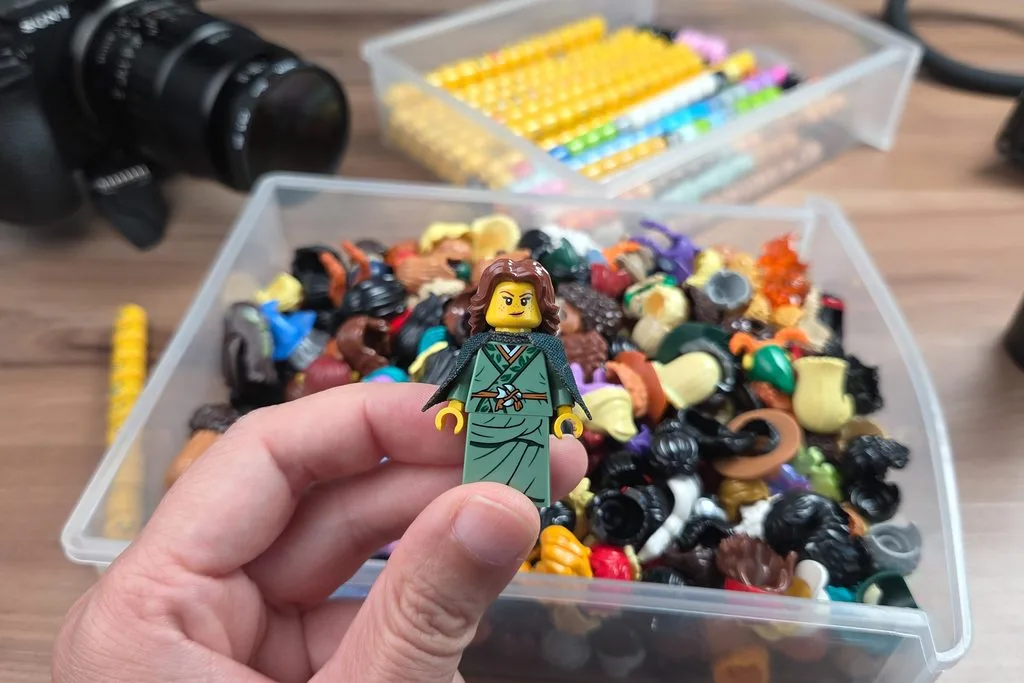
The interesting part is that the same qualities that make a character exciting to create can also make it exciting to photograph. Something unexpected gives you more to explore as a photographer, and more for a viewer to discover.
You don’t have to chase novelty for an audience. You can chase it because you’re curious about what you can make. That’s what I do. And when someone else gets excited about a character I’ve built, that’s a lovely bonus. It means I’ve found someone who shares my enthusiasm.
What NEW characters change
My subjects are different character configurations that you can’t buy in a LEGO set. I build them with unusual part combinations, fabric capes I make myself, custom-printed elements, and accessories you won’t find in any LEGO catalog.
That creates novelty, but it does something else, too.
It tells the viewer that someone had an idea, hunted down the right parts, and put time and effort into making something specific. This character didn’t simply emerge from a box with a numbered instruction booklet. Someone made choices.
And choices are interesting. They give people things to notice, questions to ask, and details to appreciate. Maybe they want to know where that hairpiece came from. Maybe they’ve never seen that torso paired with that head. Maybe they just want to know why this tiny character has better clothes than they do.
You don’t need custom parts to achieve the same effect, either. A purist minifig assembled thoughtfully can look completely different from the off-the-shelf version of the same character.
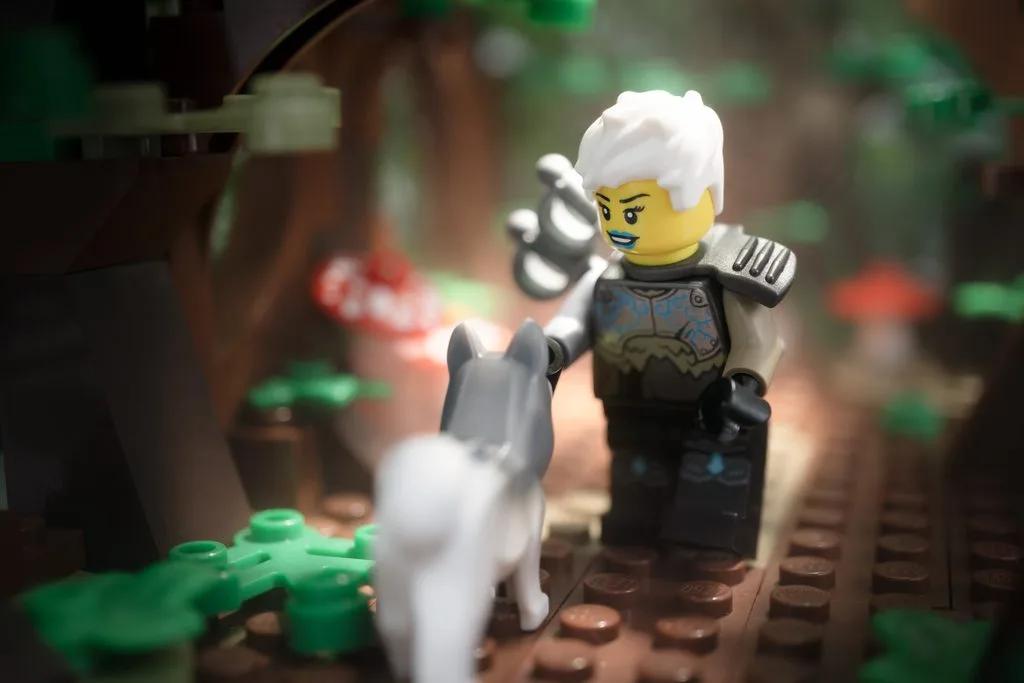
Try an unusual color combination. Use a rare part in an unexpected way. Find a face print that doesn’t appear in every other photo on your feed. Build a character with a personality, rather than simply assembling the character LEGO intended.
The point isn’t to make everything custom. It’s to make the result feel like your creation.
My style is about characters and light
My photography is recognizable for two main reasons: the lighting and my obsession with building characters nobody has seen before.
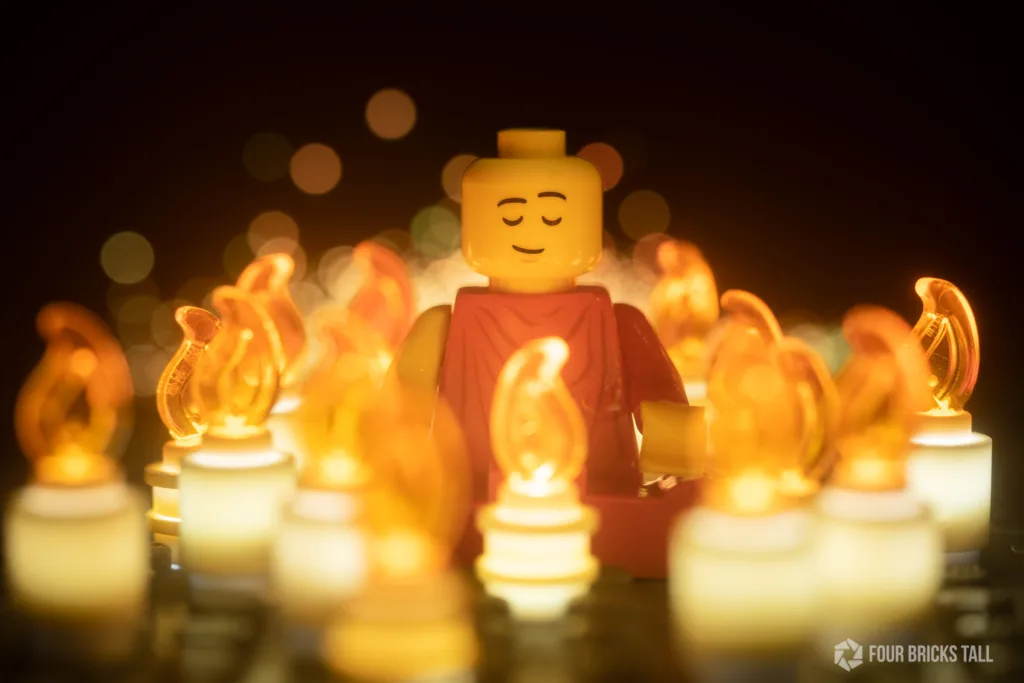
My most popular article on this site is My LEGO Photography Workflow, and I make a point of thinking about the subject before I even pick up the camera.
As I wrote in that article:
Apart from lighting, having unusual subjects is part of what makes my photography distinct from the now thousands of LEGO photographers out there.
People who have followed my work for a while can recognize one of my photos partly because of the characters in it. Having a recognizable style gives me something to build on, and it means I don’t have to start from scratch every time I want to make something that feels like mine.
I didn’t develop that style by asking what would perform well. I developed it by repeatedly making the kinds of characters I love, then getting better at photographing them.
It’s also why I’ve been writing more about minifig configurations on the blog lately, and making 360-degree videos of them on YouTube. Building the character isn’t just a step I go through before taking a photo. It’s a big part of what I enjoy about LEGO, and a big part of what makes my photography mine.
You don’t need to copy my approach to get there. Your signature might be elaborate builds, hilarious scenes, obscure parts, dramatic storytelling, or something nobody has thought of yet.
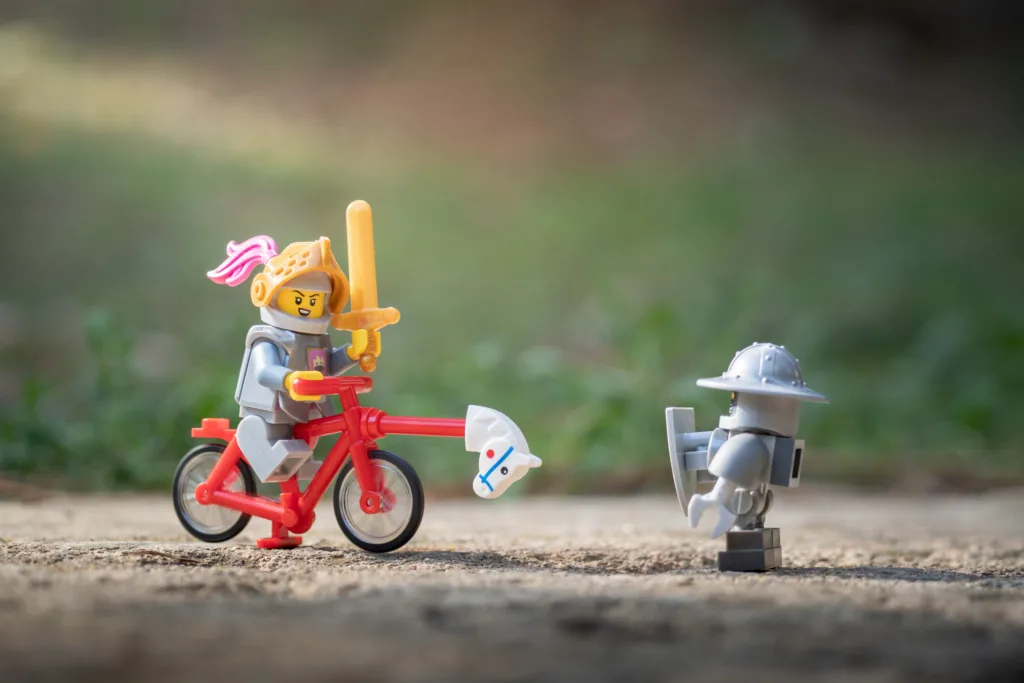
But having a recognizable thing is powerful. And making things that other people haven’t seen before is one way to find yours.
How I start
Before I touch my camera, I dig through my minifig parts and pick one thing as a starting point. It might be a head, a hairpiece, or a torso. It’s usually something I ordered from Pick a Brick or BrickLink rather than from a set. It also helps that I keep all minifig parts in bins rather than assembled for display because it’s easier for me to visualize what that part could be rather than what it already is.
Then I build outward from there, mixing parts from different LEGO themes until I have a character I haven’t seen anywhere else.
A few things I look for along the way:
- A new part. Because novelty.
- A complementary or analogous color combination. The colors on the torso have to play nicely with the colors on the legs.
- An overlooked face print. A great expression can give a character personality before you even put it in a scene.
- A part used unexpectedly. In the LEGO community, we call this NPU: Nice Part Usage. LEGO designers had a particular purpose in mind. That doesn’t mean we have to respect it.
- A custom detail. An unusual accessory or another small addition that makes the character feel like a creation rather than a catalog entry.
I don’t need every character to tick all five boxes. Two is often enough.
Once the character feels interesting, then I think about the setting, the lighting, and the story I want the photograph to tell. That order matters to me. I want to photograph something I’m already excited about, not hope that a clever lighting setup will make me care about it.
For LEGO photography, I build the concept around the facial expression on the minifig. If my Viking is smiling, then I have to give him a reason why he feels happy.
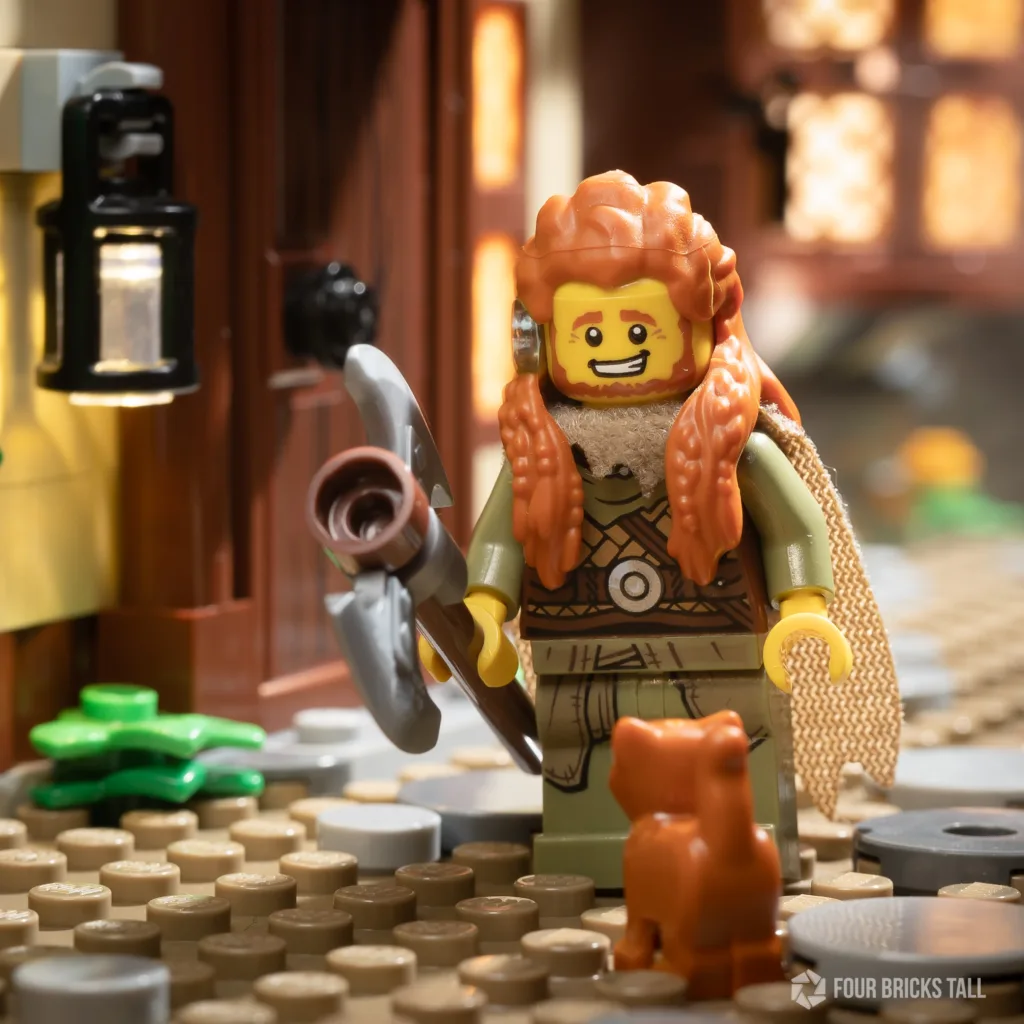
An interesting character doesn’t automatically make an interesting photograph. It’s just a better starting point. I still have to figure out what to do with it once I put it in front of the camera.
What if you shoot IP?
Of course, not everyone has the freedom to invent new characters.
If you photograph Batman or Star Wars, staying true to canon might be part of the fun. You want that character to look and feel like the character people know. Sometimes the whole point is that it’s that character.
That’s a perfectly valid way to photograph LEGO. My approach isn’t better; it’s simply what I enjoy.
There are plenty of other ways to explore creativity when your characters are fixed, and I’ve mentioned a few of those before: the pose, the story, the setting, the lighting, or something the viewer hasn’t noticed before. If you need some inspiration, have a look at the book Small Scenes, Big Galaxy by Vesa Lehtimaki.

It’s LEGO Star Wars but full of new takes like this Snow Trooper on vacation. I own this book, and I’m not even a Star Wars fan, but it taught me to look at LEGO photography in a whole new way.
For now, try this: next time you’re building a minifig to photograph, pick a seed part. Forget the official configuration for a moment and see what else you can make with it.
Don’t worry about whether it’ll get likes. Make something that excites you. You might end up with something ridiculous. Or you might end up with something brilliant.
And if you end up with a medieval peasant wearing antennas from a space alien, at least you’ll have made something that’s yours.